
Funded Travel in LA with the Japanese American National Museum, and More!
Curious about professional development for teachers with the Japanese American National Museum? Let's welcome teacher travel expert, Maria, to fill us in on this, and also travels with AATSP through Orlando, Spain, and beyond!
Teaching Traveling: Maria, tell us a bit about your background.
Maria: Hola! Konnichiwa! My name is Maria Esmerian-Dessipris, a passionate globetrotter and educator of languages and cultures entering year 35 of my teaching career!
My bio, achievements and latest whereabouts can be read in these two articles previously published here in Teaching Traveling: "Funded Travel to Armenia" about the powerful GenEd Fellowship, and the subsequent interview article about the White House Teacher Institute, "From the Panama Canal to White House History."
TT: Welcome back, Maria! Tell us about your recent travels with the Japanese American National Museum.
Maria: Summer 2026 was amazing and well-travelled due to the many opportunities I seek through fellowships and collaborations.
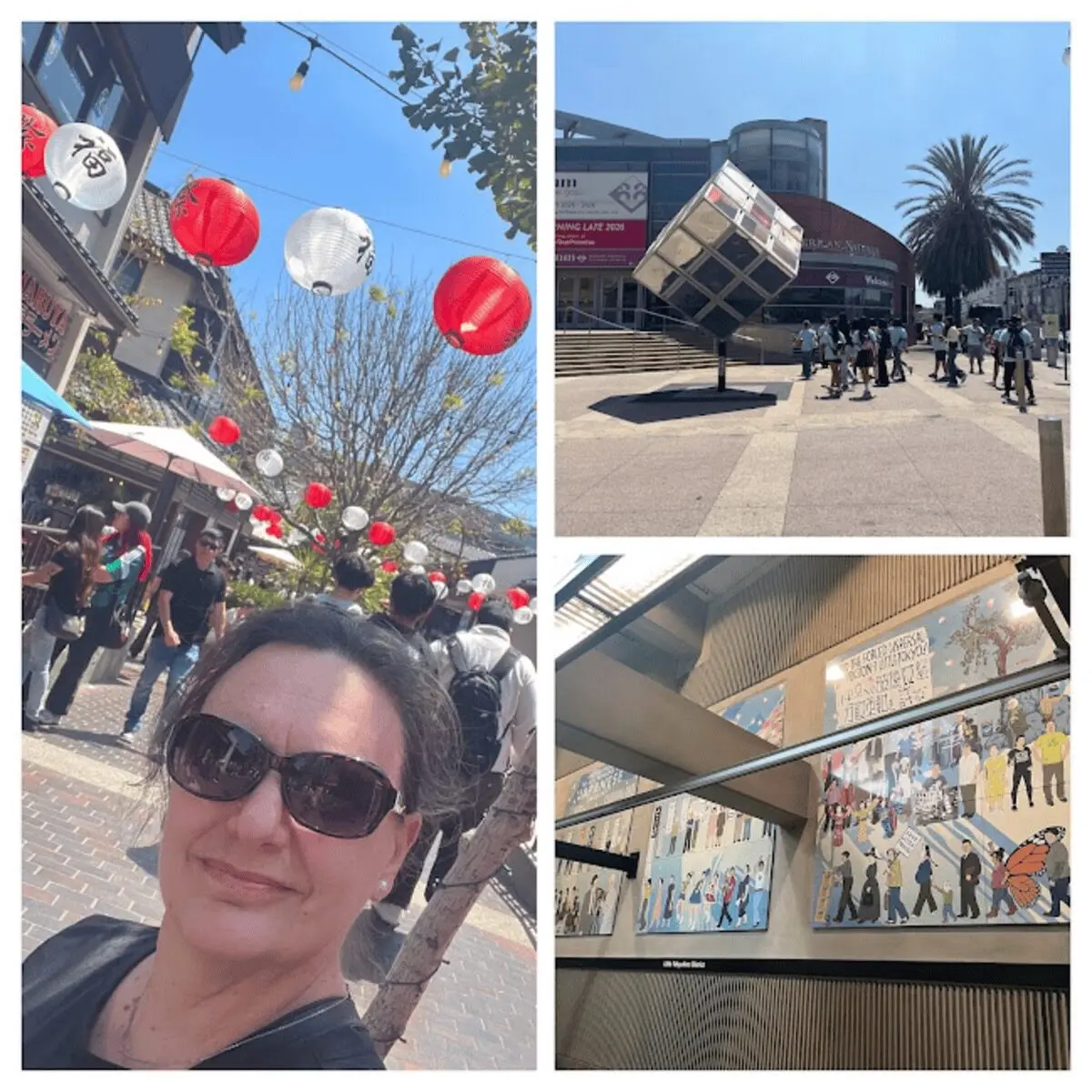
The first stop was Los Angeles, California, as I was selected by the Japanese American National Museum to participate in their week-long Summer Educator Workshop: “Little Tokyo: How History Shapes a Community Across Generations.”
JANM's education team, administrators, donors and the wonderful survivors who shared their testimony were dignified, kind and knowledgeable and took care of every detail surrounding travel, accommodations, enriching activities, outings as well as the comfort level of the content and experiences discussed about the incarceration of Japanese Americans during World War II and the later Redress and Reparations.
Ahead of the week in Little Tokyo, each selected teacher received a reading and media list online and a package from JANM with books and resources to read in preparation for lectures and discussions. Tiles such as “Citizen 13660”, “They Called Us Enemy” and “Farewell to Manzanar” were among my favorites to read and to truly understand what this community endured during the internment and how they later redeveloped and still continue to contribute to the community with honor and grace.
A Powerful Moment...
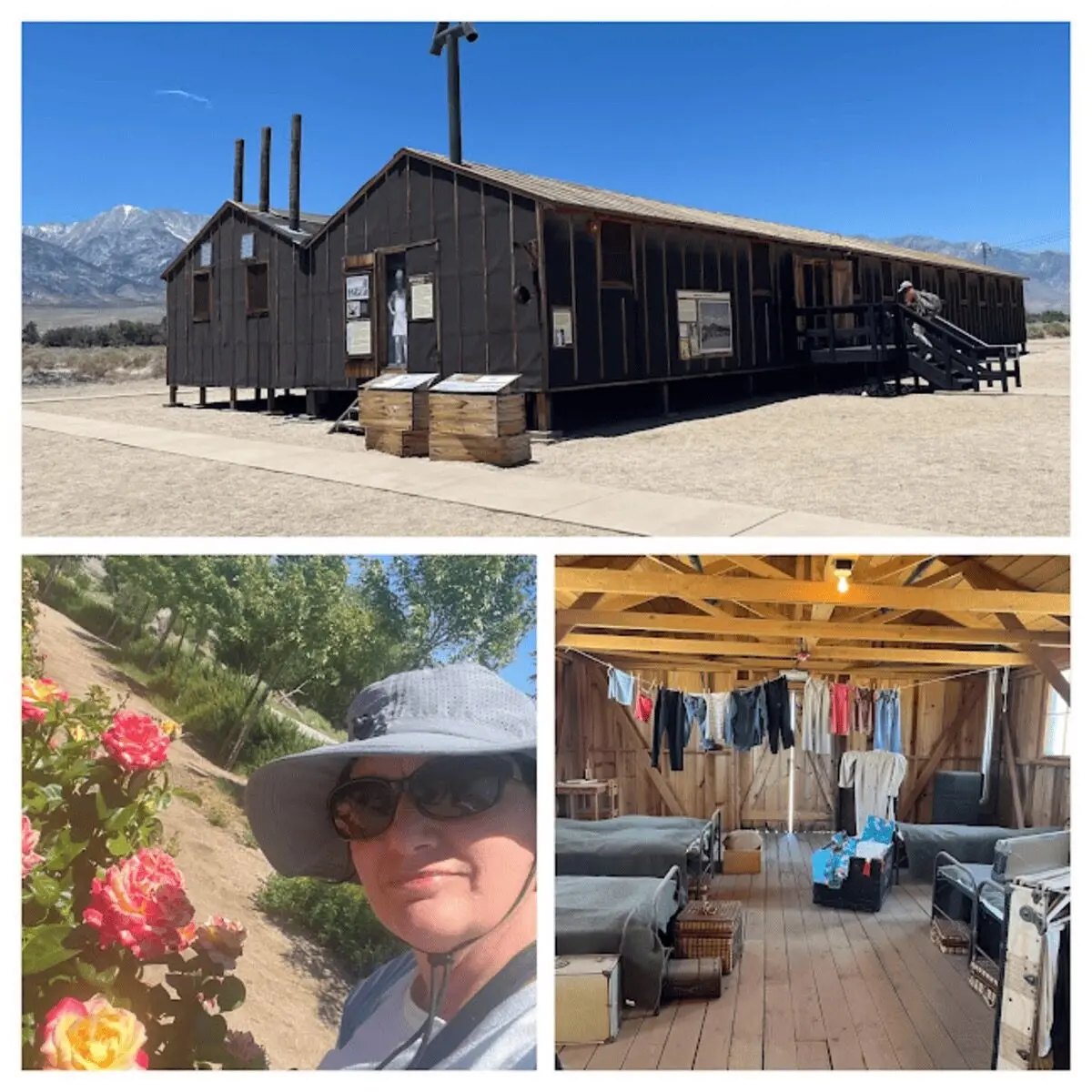
Visiting the Manzanar National Historic Site, former incarceration site. Walking in and around the barracks in the middle of the desert during a very sunny and hot June day after a 3-hour bus ride (each way!) from L.A.
Taking it all in and reflecting on what must have been during incarceration times: weather conditions, hygiene, education, overall daily life…and trying to understand Why? A path took me to an orchard with trees, roses, a wooden bridge and some benches which remain as an oasis in the middle of all that solace.
That particular spot seemed to me like a sign of hope, like a sense of a better tomorrow. A glimpse of the week spent at JAMN is officially shared in this video: JANM-Little Tokyo-Summer 2026
An Interesting Moment:
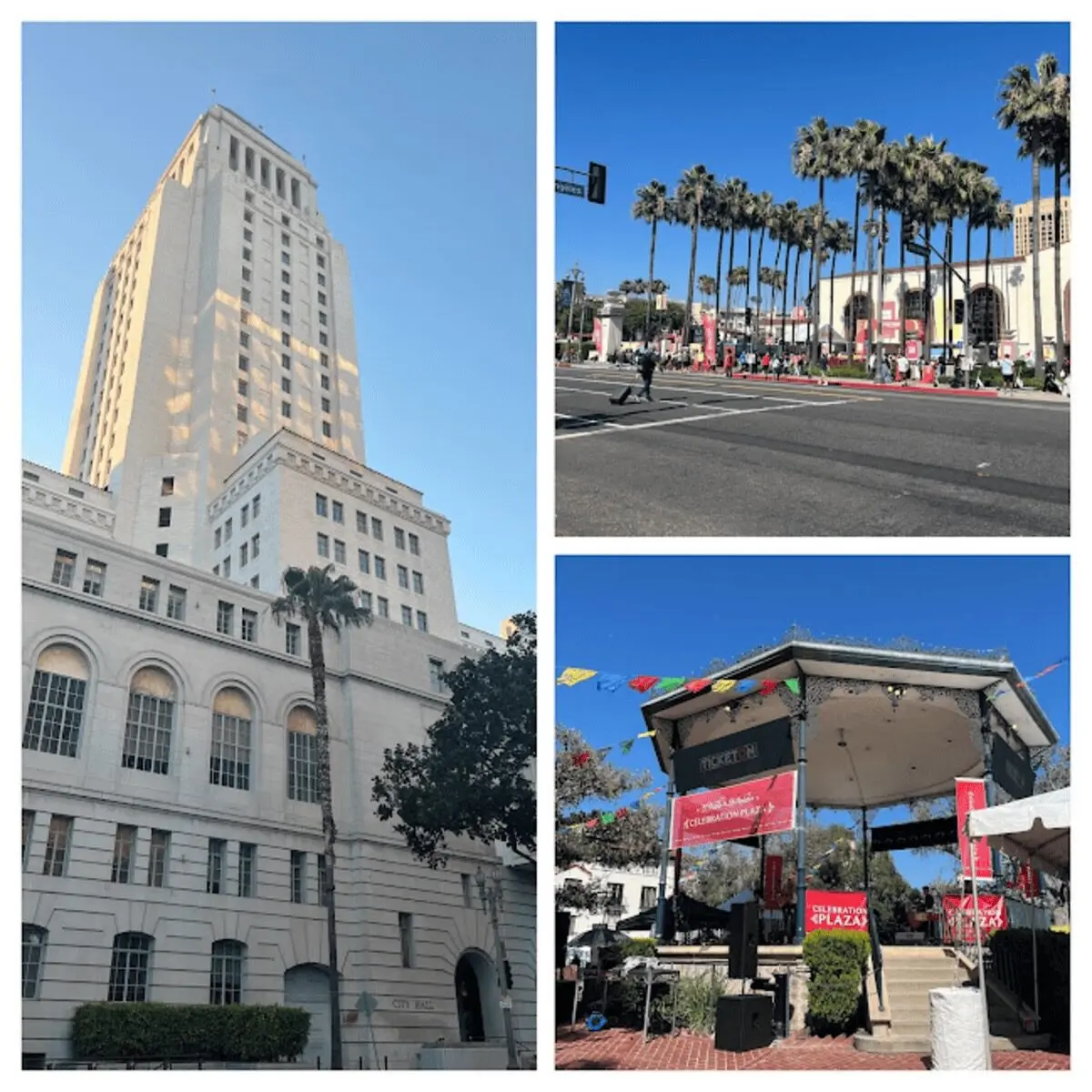
I used public transportation from LAX to Union Station while taking in the city. So much has changed since I first visited 25 years ago but still preserves that West Coast feel: ocean breeze, cooler temperatures, and a relaxed atmosphere. This was all confirmed when I took the metro to Santa Monica and Venice Beach that very same afternoon to catch a wave and grab a bite on the boardwalk.
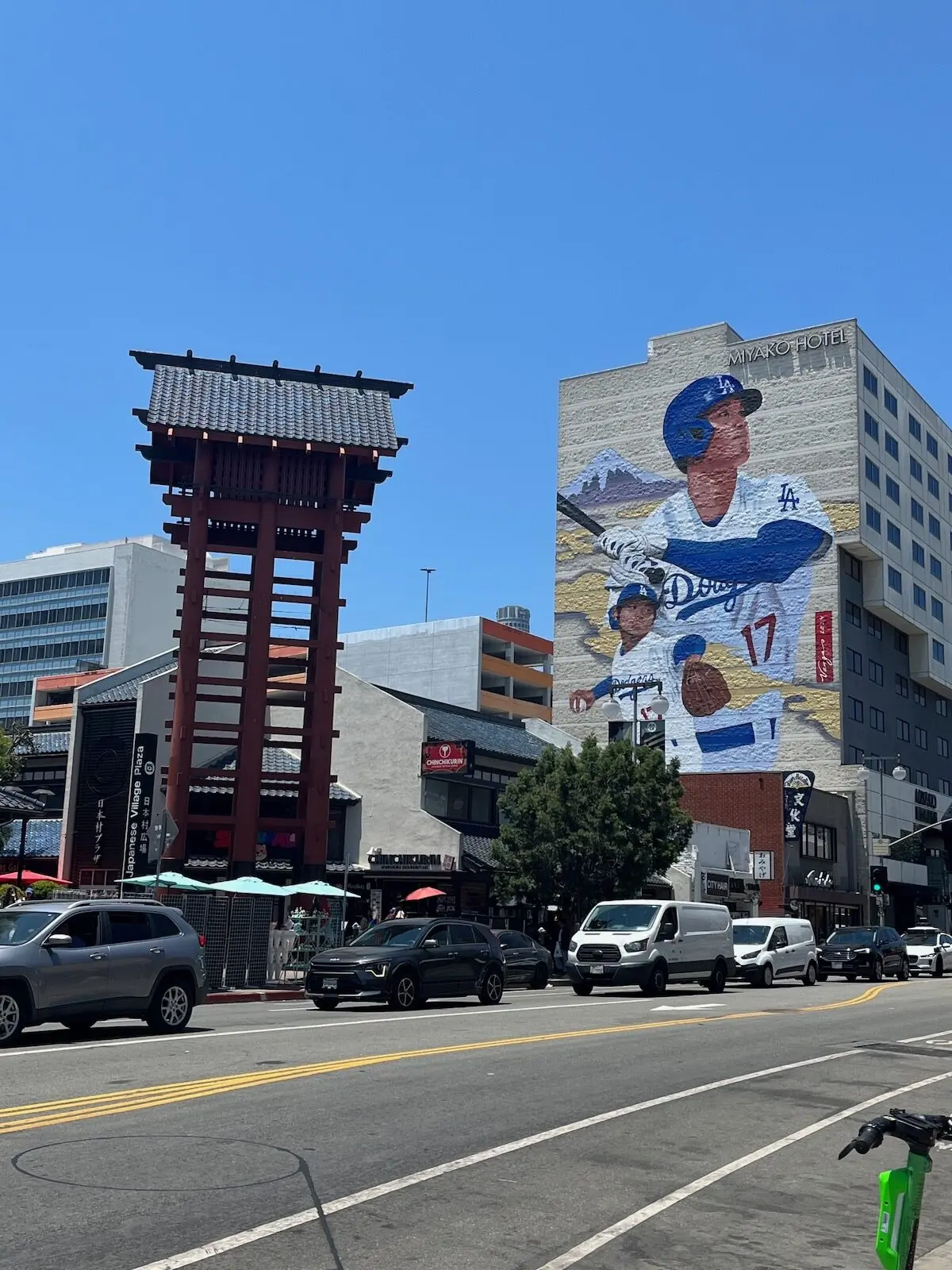
The short walk from Union Station to the Miyako Hotel in Little Tokyo was so interesting!
On one side of the highway is the Paseo de la Plaza with El Pueblo de Los Ángeles Historical Monument, widely considered the historic birthplace of the city and Olvera Street, a brick-lined pedestrian marketplace filled with colorful stalls, hand-crafted Mexican folk art, leather goods, pottery, and clothing. Traditional eateries, outdoor cafes, and legendary street-style taquitos combined with a live mariachi band playing, iconic lowriders driving by and the FIFA Fun Fest going on in a nearby stage made my Sunday a glorious one. The neighborhood was so alive so I took tons of photos to show my students in Spanish class.
On the other side of the highway after crossing an ample bridge, I experienced the transition into Little Tokyo, with quieter crowds, pagoda-style architecture and beautiful Japanese lanterns adorning the stores. It immediately took me back to Tokyo in Japan where I had been (and loved!) in March 2026 with a group of students. Déjà vu! It was a sudden feeling that I had already walked through similar pristine streets and I felt right at home!
A Funny Moment, in a Way...
We did a walking tour of the neighborhood led by experts of the Little Tokyo Historical Society. It was fascinating to hear stories from several generations, maintaining or repurposing buildings through time, and keeping the Japanese culture alive through museums, martial arts and ping pong schools, or food establishments.
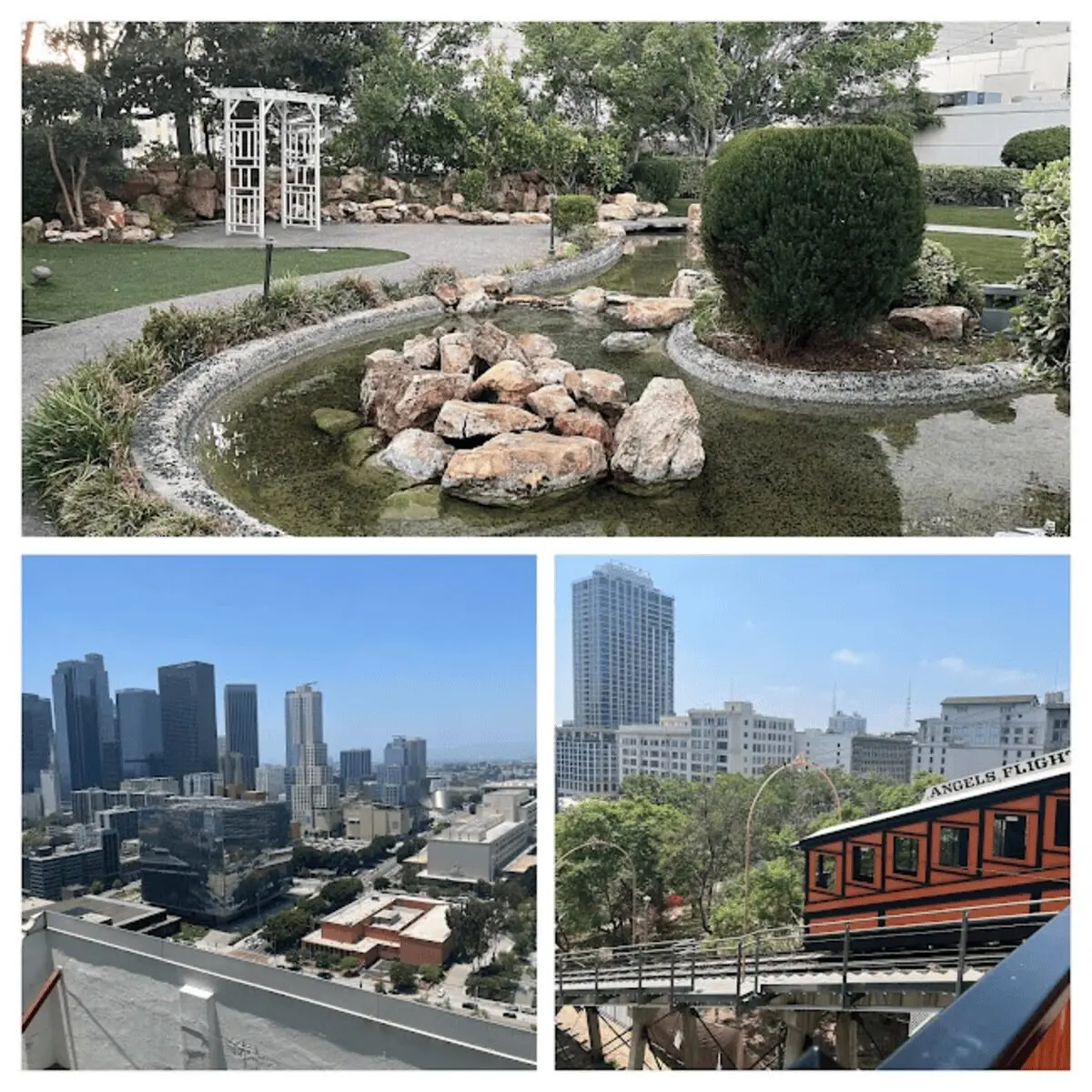
Because I love nature, I particularly liked visiting the James Irvine Japanese Garden (also known as Seiryu-en or "Garden of the Clear Stream"), a sunken urban oasis sits inside the Japanese American Cultural and Community Center. Back in the JANM workshop, we debriefed about the tour and also did a “pictionary’ activity of what we saw, sensed and liked in the 4 main corners of the neighborhood.
Curious as I am, I asked the experts where the most serene and hidden enclave of the entire area was. “The Kyoto Garden on the rooftop level of the DoubleTree Hotel, 4 blocks from here. But don’t bother trying… it is hard to get in if you are not a guest.” Challenge accepted!
Using my JANM badge and explaining my research, a very kind receptionist gave me a pass for 15 minutes to access the specific elevator to the rooftop. What a sanctuary! Such a peaceful and beautiful Japanese garden in the middle of the hustle and bustle of the city. It features cascading waterfalls, koi ponds, stone pathways, and a dramatic view of the downtown skyline.
TT: Wow, your time with JAMN in LA sounds incredible! Now tell us about your Puerto Rico travels...
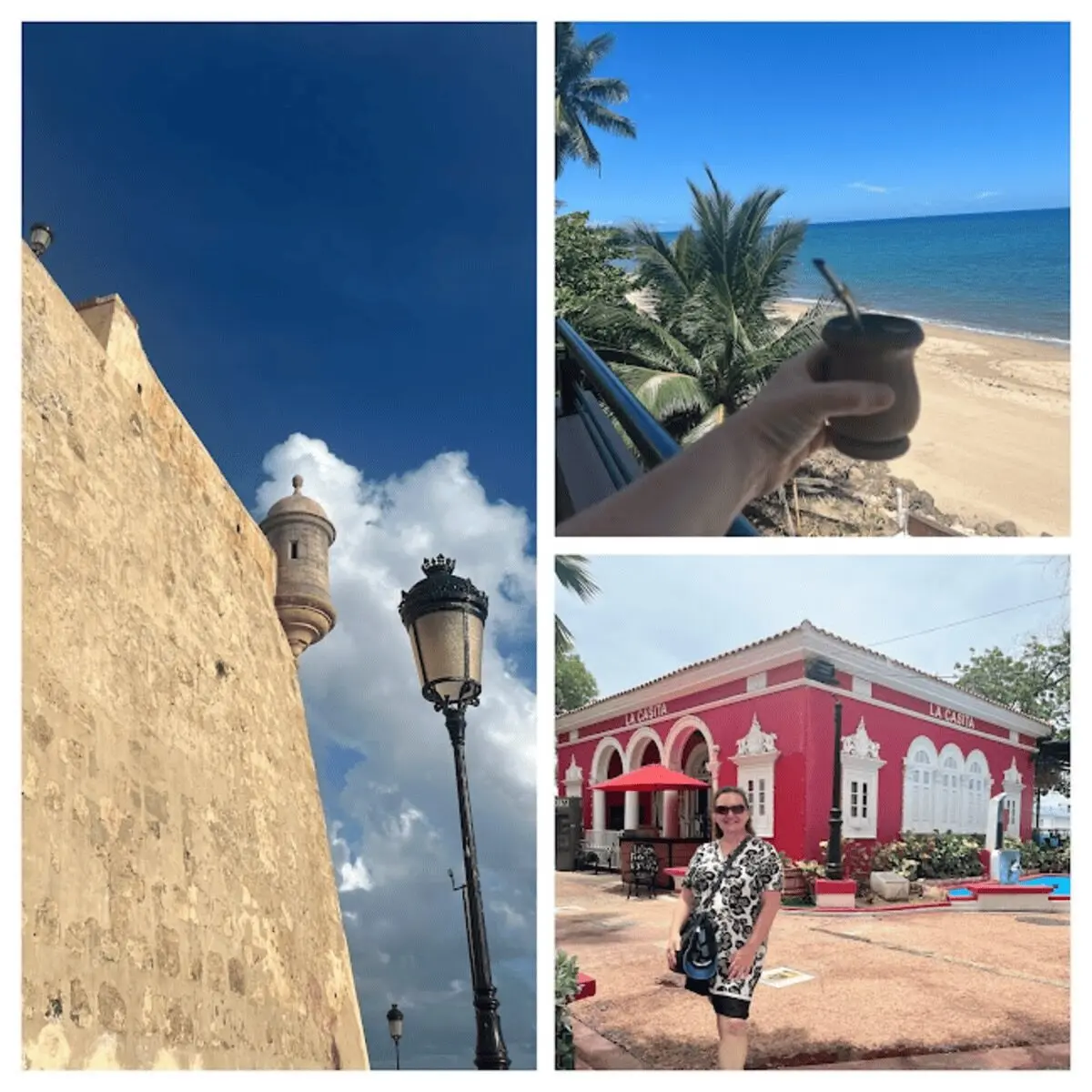
Maria: My second stop this summer was Puerto Rico! Complete relaxation with the family by the beach, delicious food, and Bad Bunny playing in the background. On the West Coast, we enjoyed the slow pace of Aguadilla and the lively Rincon Art Walk that takes place every Thursday evening in the downtown plaza, showcasing the talents of local artists, food vendors, and musicians.
On the East Coast, we visited Condado and Old San Juan where we watched another FIFA game: Argentina, which won and advanced to the next round.
TT: Excellent! What about the AATSP Conference you went to in Orlando?
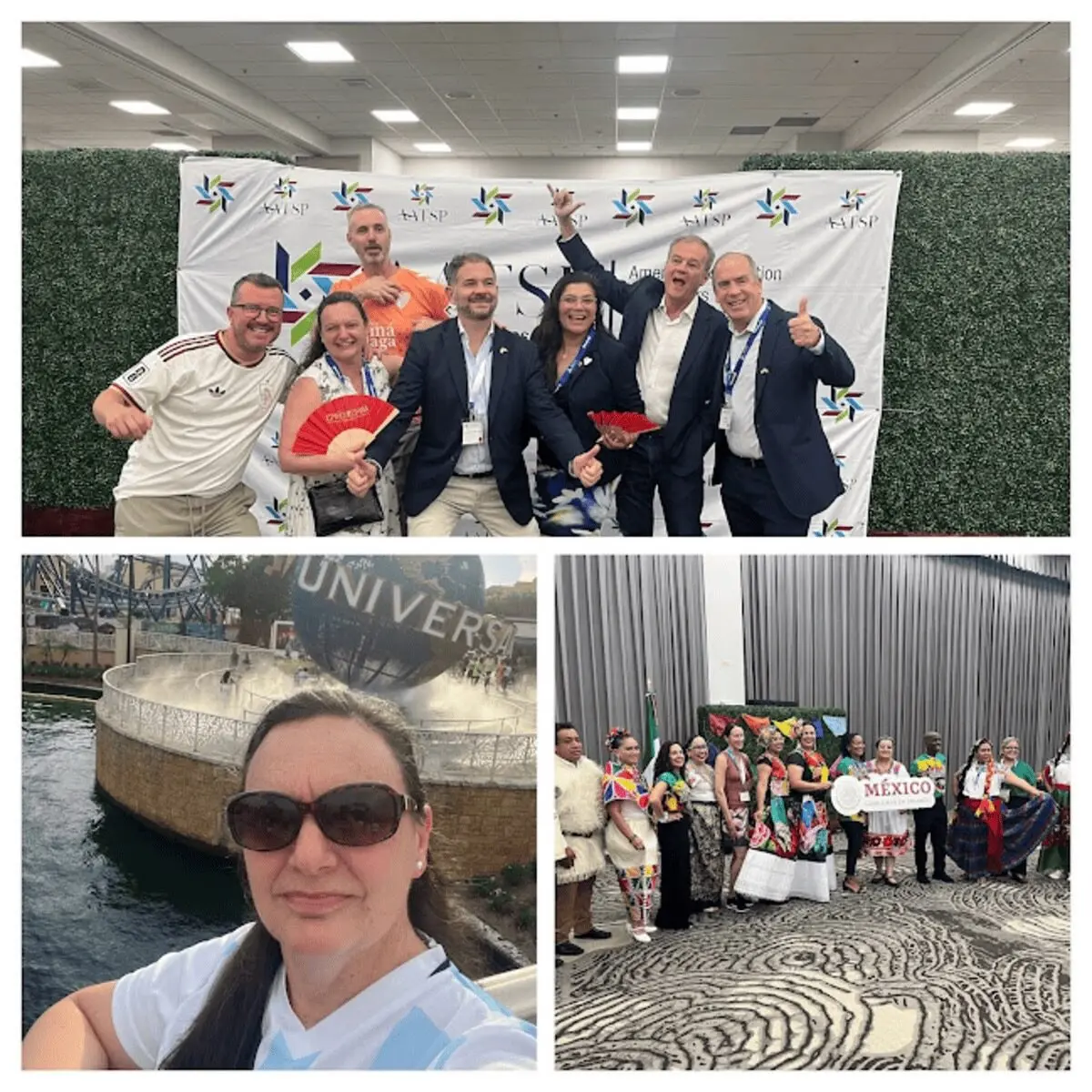
Maria: My third stop this summer was Orlando, Florida to attend and present at the 108th AATSP Annual Conference. Teachers of Spanish and Portuguese, administrators and entities that support and promote languages and cultures came together to exchange ideas, celebrate our profession and achievements, and enjoy collegiality before returning home inspired and energized for the school year ahead.
Coincidentally during those 4 days we gathered in the lobby of the hotel or nearby sports bars and watched several World Cup games with teams from Spanish-speaking countries. Argentina and Spain won respectively and moved on. (See the pattern?)
My session, “Heritage Language Voices through Personal Stories and Cultural Heirlooms from the Spanish-Speaking World,” was designed to learn how Heritage Language Learners (a.k.a the collaborators, collectors and curators) and the community tell their personal stories using cultural artifacts of Luso-Spanish-speaking countries that are authentic, original, recycled or repurposed.
Through PBLL (Project-Based Language Learning), students immerse in work that is relevant to them, the real world and designed for an audience beyond the classroom. A potpourri of interconnected resources and global opportunities were also showcased to bridge cultural appreciation and promote language learning.
TT: Wow! And next you went to Spain?
Maria: Yes, my fourth stop this summer was Spain. Olé!
(Important note: when boarding the plane in NJ, Argentina and Spain had both just qualified for the World Cup final. The game was going to be played in New Jersey and I was going to see it with the Spaniards. Being from Argentina, I had so many mixed emotions!)
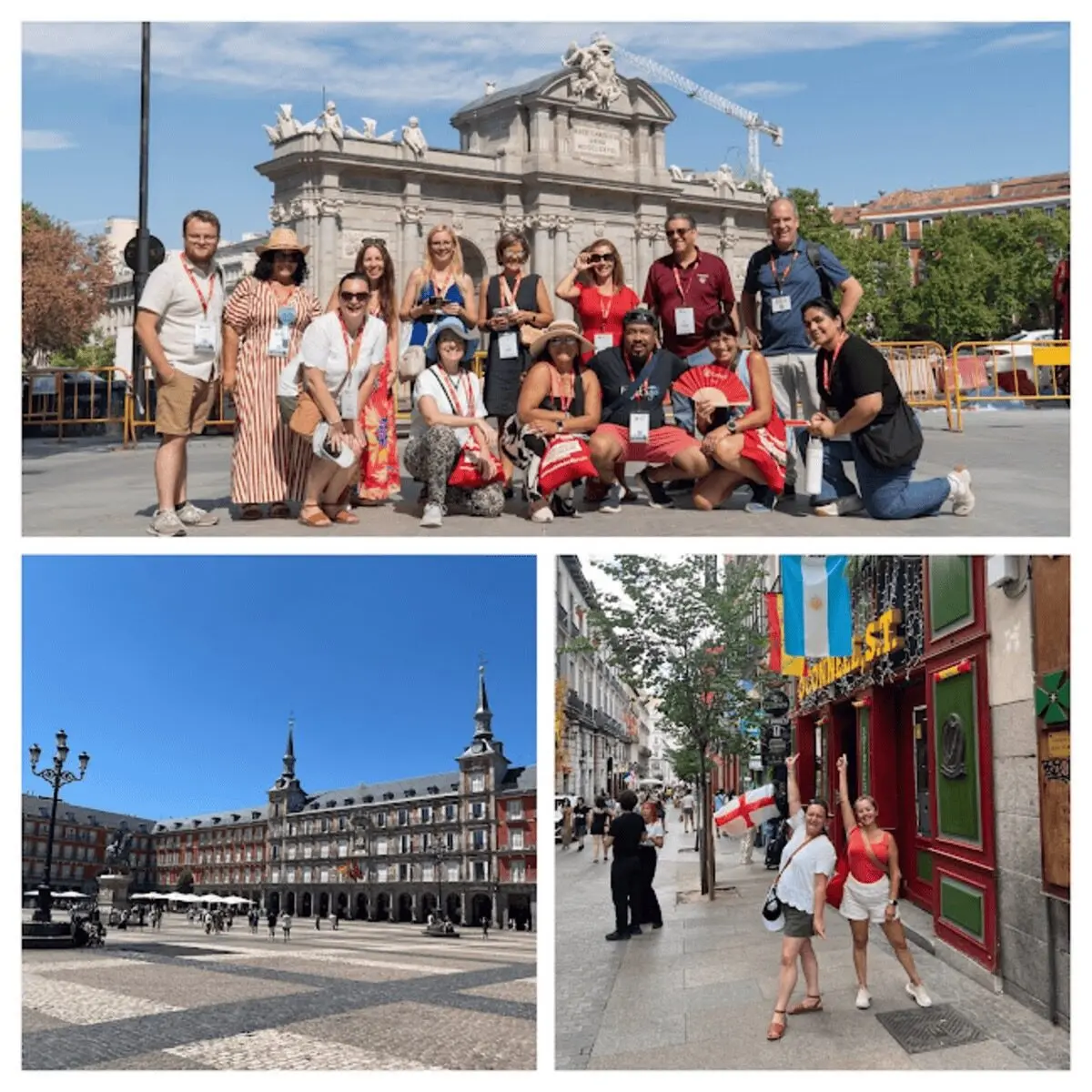
As soon as the AATSP conference concluded, a selected group of AATSP Chapter Leaders departed for Spain to participate in the AATSP Chapter Leadership Program at the University of Salamanca. Our journey began in Madrid, where I secured a 3-day layover stay for all participants with Carlos V Education.
We spent several memorable days as guests in a lovely college residence exploring the city, participating in workshops and professional development activities, and immersing ourselves in the Spanish culture through flamenco dancing, paella cooking and walking tours of Parque del Retiro.
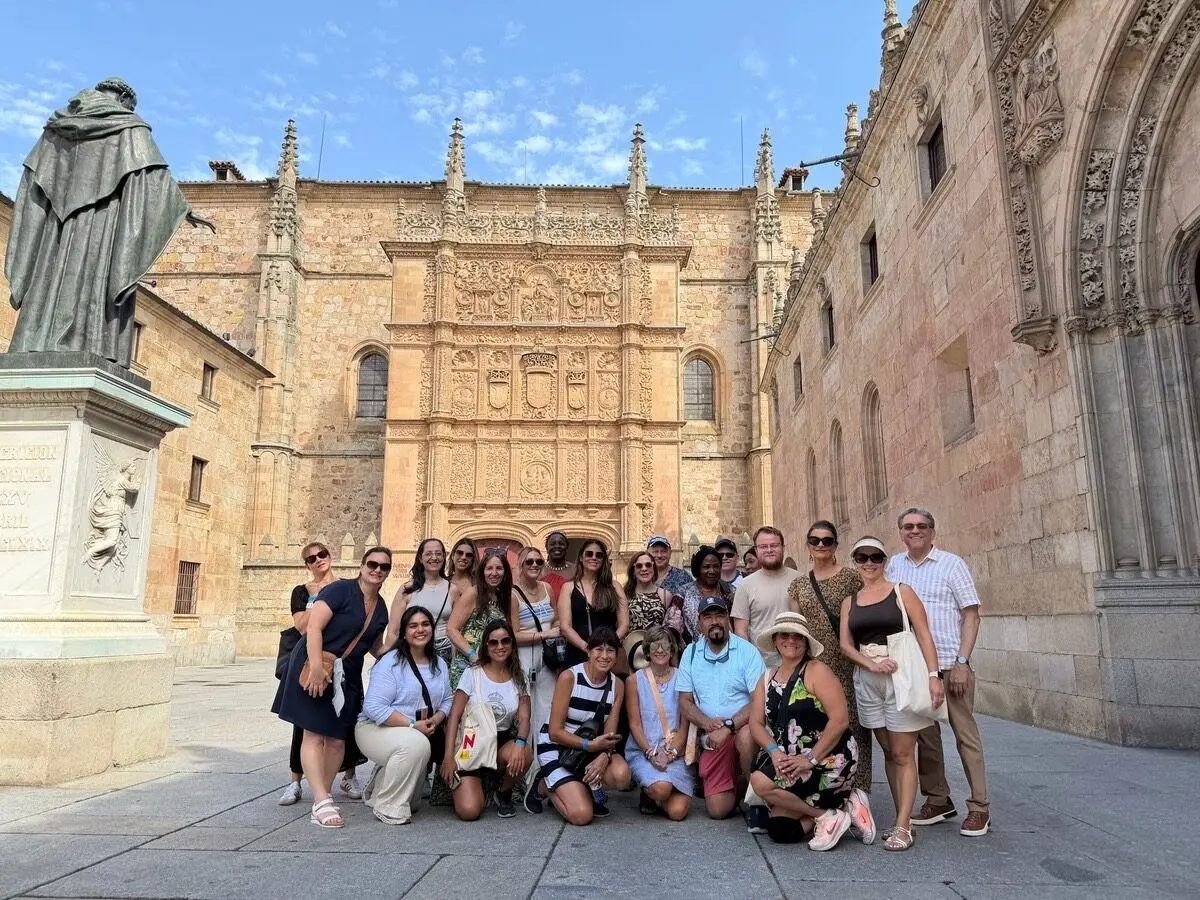
The AATSP Chapter Leaders then traveled by train to Salamanca for five inspiring days of professional development hosted by the University of Salamanca. The program combined outstanding instruction, thoughtful discussions on leadership and organizational management, exceptional hospitality, and opportunities to explore one of Spain's most beautiful and historic cities. Staying at the university’s residence, sharing communal meals and late-night conversations on the patio under the stars made the whole experience more rewarding!
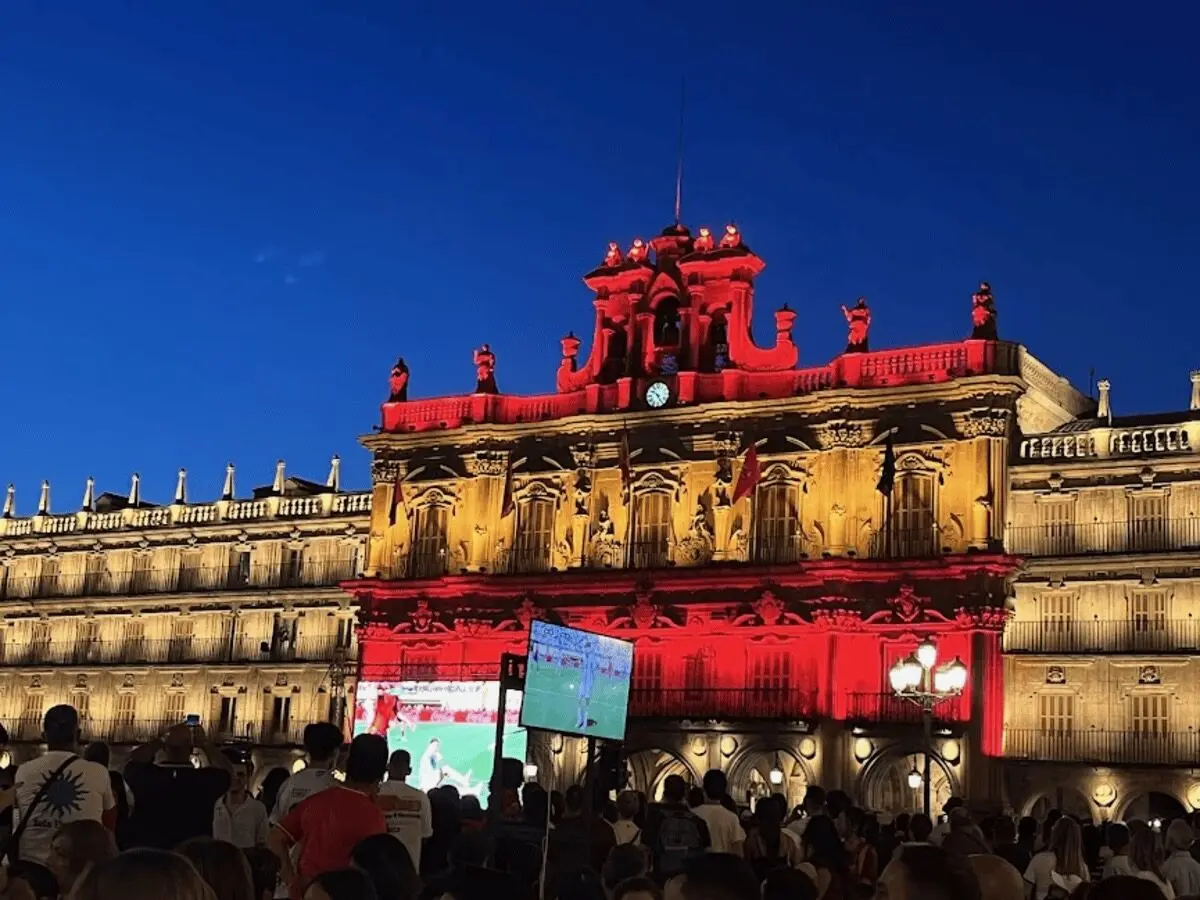
“Our time in Salamanca began with an unexpected gift. We arrived one day before the program officially began—just in time for the World Cup Final between Spain and Argentina. As thousands gathered in Salamanca's magnificent Plaza Mayor to watch the match on giant screens, we eagerly joined the celebration. Some of our chapter leaders proudly cheered for Argentina, while others enthusiastically supported Spain. The friendly rivalry only added to the joy of an evening none of us will soon forget.”
- Dr. Carreira, AATSP Executive Director
With text messages buzzing on my phone from friends scattered around the world, when asked about Argentina’s loss and Spain’s win, all I could say was that it was an unforgettable night in the Plaza Mayor, a historic event to remember and that after all, we speak the same language!
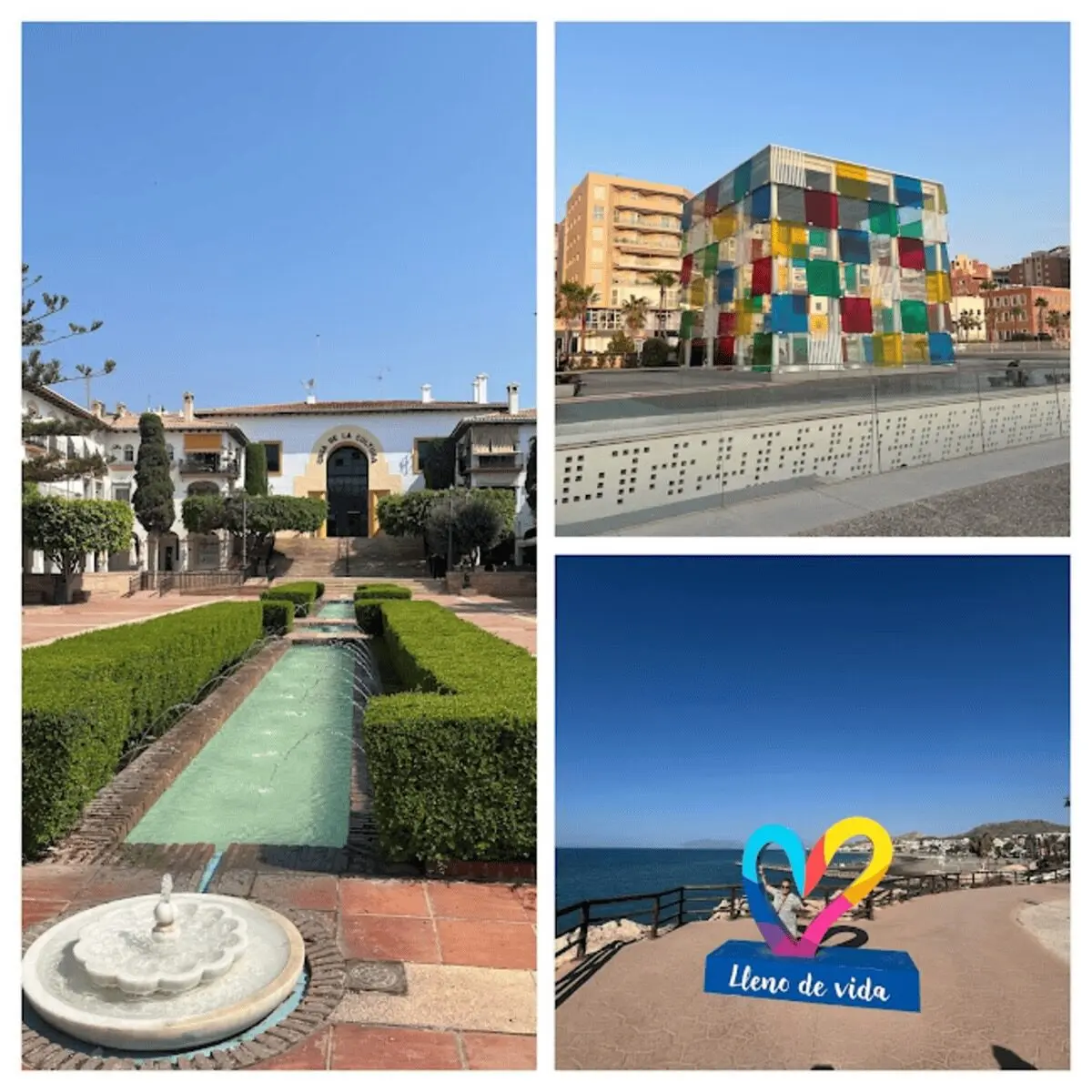
Once the week at the University of Salamanca concluded with a solemn graduation ceremony and a very lively dinner afterwards, we all parted our ways. I took the train to Málaga in the Coast of Sun as part of an exclusive invitation from Hablandis and its owners. A colleague and I toured the facilities and observed the Summer Camp in action with students and families from different parts of the world who spend 2 or more weeks learning or brushing up their Spanish and being immersed in the culture of Andalusia in a very relaxed, beachy atmosphere.
We enjoyed some tapas al fresco with colleagues and walked by the port in Málaga in the evenings. On the last day, I took a local bus to Torremolinos-Benalmadena to enjoy a day at the beach with friends.
TT: What a summer of travel and learning you had! How did you find these funded professional development opportunities?
Maria: For JANM, Check out their resources, lesson plans and projects in its comprehensive website. Sign up for their Newsletter and receive information about workshops, webinars and scholarships or fellowships.
For AATSP: Experiences like these are among the many rewards of membership and active involvement in the AATSP. They foster lasting friendships, broaden professional networks, and remind us that ours is truly an international community. For both students and teachers, AATSP continues to offer contests, awards, exams, stipends, scholarships and programs to participate in cultural, international and leadership initiatives.
For Carlos V Education: As a valued partner with whom I closely work with to take students to Spain often, I highly recommend checking out its website; reach out to them directly and mention my name or contact me with any questions you may have. They are currently running this contest with awards and travel giveaways for Summer 2027.
For Hablandis: Language Classes, Teacher Training, Summer Camps with a view of the Mediterranean Sea! Reach out to them directly and feel free to mention my name.
TT: How have your travels impacted you as a teacher and a person?
Maria: Travel has constantly reshaped me personally and professionally while offering adaptable worldviews, real-world problem-solving capacity (including last minute decisions on location!), and cross-cultural empathy. Interacting with people across language and cultural differences sharpens active listening and clarity, hence enhanced communication.
Travel, like teaching, helps with resilience, resourcefulness, broader perspective, and curiosity! That is why I love to travel and teach and vice versa!
TT: What advice do you have for teachers who are dreaming of travel, or travelers dreaming of teaching?
Maria: What may seem difficult, may not be impossible! The sky (to fly from destination to destination) is the limit!
Reach out. Talk to others. Seek resources. Complete that application you started for a particular fellowship.
Tailor your projects and goals to that opportunity you so much desire! (and deserve!) As the old proverb says, “When there is a will, there is a way” And as I always say… Travel. Learn. Teach. Repeat!
Many Thanks!
TT: Thanks so much, Maria! Readers, what questions or comments do you have?

The author, Lillie Marshall, is a 6-foot-tall National Board Certified Teacher of English from Boston who has been a public school educator since 2003. She launched TeachingTraveling.com in 2010 to share expert global education resources, and over 1.6 million readers have visited over the past decade. Lillie also runs AroundTheWorld L.com Travel and Life Blog, and DrawingsOf.com for educational art. Do stay in touch via subscribing to her monthly newsletter, and following @WorldLillie on social media!
Thank you for letting me share information and resources that make teaching fun and more effective, and that hopefully inspire growth and bring fresh and exciting approaches to colleagues and their classrooms! M.D.