TeachingTraveling.com: Curious about what it’s like to teach at an International School in Dubai, and travel on every holiday?
Read on for the story of Kristy-Lee Adams!
Kristy, tell us a bit about your background.
Kristy: I’m an Australian teacher who really hasn’t been teaching for long at all! I always knew I wanted to travel, but never really knew how or when I was going to do it. It took my pioneering fiancée to nudge me over the edge, and after I finished my university studies in 2008 I moved out of my comfort zone by heading interstate. I kept my bills paid as a teacher aide and part time bartender for most of 2009 in Melbourne before jumping on a plane to Dubai with my fiancée. I’d never visited the United Arab Emirates before, so it was a very big adjustment to pack up and move.
After I arrived, I applied to a range of schools that were taking up applicants to fill “runner” positions, covering those who had just packed up and left the country without notice part way through the academic year. I took a position teaching English and Humanities in a very small private school (only 150 students) where I really learned how difficult it can be breaking down the cultural barriers of education and motivation in the Middle East. I have to admit, it was really tough; the commute was exhausting, the classes and students were very challenging, and it was only my second short term contract as a teacher. I learned a lot, and I learned fast!

Since then, a new academic year has begun and I’ve now finished my first full year of teaching English in my second Dubai school: a wonderful International Baccalaureate school with students who love learning and make every lesson so much fun to teach!
There’s still a lot of pressure on teachers here as parents pay A LOT of money for education in Dubai and most classes have non-native English speakers from 10 or more different nationalities, all taking an English as a first-language course.
But, these are all experiences that I know will help boost my resume anywhere else in the world, and I love learning about the histories and backgrounds of all my kids; they’re a huge bunch of travelers themselves!
TT: Fascinating! Tell us more about your travels.

K: The wonderful thing about living in the Middle East is the access to cheap, fast and easy travel. When you live in Australia, your travel dreams are built around huge eight or nine week adventures because it costs so much just to get a flight out of the country! Not so from Dubai.
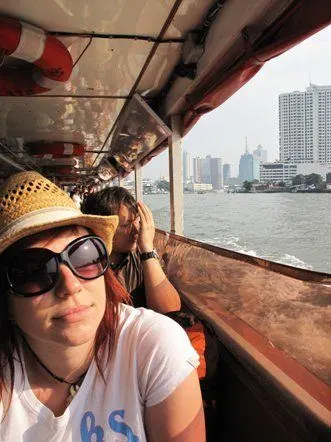
Since arriving here, we’ve travel to a myriad of “little” countries including Bahrain, Kuwait, Oman, and Nepal as well as a bunch of other bigger ones like England, Scotland, France, and the United States. I remember booking the flights to Kuwait for only US$24 each way, and that was in the days before Christmas! With such opportunity and access, every Muslim holiday or long weekend, I will usually be found at an airport somewhere.
One of my most memorable trips however, was a school trip that I lead in India for the International Award program (formerly Duke of Edinburgh). I took seventeen 15-17 year old students hiking for 45km in the rural surrounds outside of Mumbai, returning to the heart of the city for some urban adventures on the same night of the Cricket World Cup Final. The atmosphere was PHENOMENAL!

My colleagues and I took the students out into the streets after the game finished at midnight to see the celebrations of a home country winning the World Cup in their national sport. We were not disappointed!
There were firecrackers, people dancing and celebrating in the streets, auto-rickshaws flying past, motorbikes loaded up with people trailing flags behind them, and my own students crying out Indian chants. It’s a memory I will never forget, and it was wonderful to share it with students who were also well versed in travelling thanks to the expat-travel culture in Dubai.
TT: Love it! How did you find the money to fund this travel?
K: Thankfully, the opportunities to earn and save money as a couple in Dubai are very good: far better than they were in Australia, which is why we have chosen to stay for an extended period of time. Initially however, it was hard work, and a second job and the sale of my little car got us out of Australia and into our travels.
It took a lot of motivation to give up many of the fun and exciting things that Melbourne had to offer, but we always kept the bigger picture in mind. I found that the initial set up costs to move here and create a “home” were crippling, but now the pressure has eased off and there are far more opportunities to enjoy this country and those around us.
My fiancée and I are looking forward to a trip home to Australia and New Zealand to visit family this summer, followed by a short break to Sri Lanka or Pakistan during the Muslim celebration of Eid. Then we’re planning a three-week over Christmas and New Year but are not sure where to. We could roll a dice! Making plans to travel out of the country is such a huge motivator to keep working hard while you’re still in the country!
TT: Yes! How have your travels impacted you as a teacher?
K: I’m definitely more flexible and feel that I’m thinking more about the world context for the content of my classes. In Australia, it was easy to go with State-set texts and work on very “Australian” things. However, in an international school, you want to take time to consider the different backgrounds of all the students.

The texts we address try to include many nationalities or cultural ideals, and we give as much room and flexibility as possible for students to express their own histories and experiences, and in a way that is most comfortable for them. I am definitely getting better at negotiating assessment tasks, rather than just setting them, I have learned SO much from my students and am grateful for their stories and ideas every day.
TT: What a fantastic description. How have your travels impacted you as a person?
K: Personally, I’ve come to realize that I can do pretty much anything I want if I put my mind to it. Three years ago I struggled with the idea of moving interstate and all the paperwork and hassles that might come with it, yet last week I hopped on a plane to spend five days wandering around Mumbai on my own.
I’ve got a greater confidence to tackle the challenges I face when I travel and I am open to more experiences. I value the world more, and the people in it. I have a greater appreciation for the fact that the way we go about our lives in the West is just one way of many and love every opportunity I have to see the others ways of living, loving and learning around the world.

TT: Amen! What advice do you have for other educators who are dreaming of travel?
K: Take a few steps back, check the wind speed, and LEEEEEAAAAPPPPP!
Don’t let all of the “what ifs” hold you back from throwing yourself out there and doing what you love, whether it’s traveling, teaching, or both.
You will be so much richer for the experience and it will always add to you as a person.
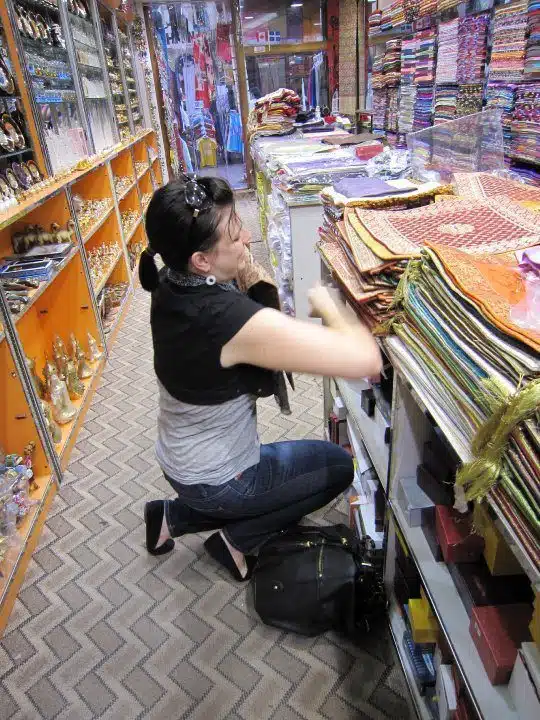
TT: Thanks so much for this excellent tale, Kristy! (And that photo of the bedazzled fridge is priceless.)
Readers, what questions or comments do you have for this intrepid traveling teacher?


Hi Kristy, I appreciate you sharing your knowledge and experience. My husband and I are considering making the move to UAE and trying to research as much as possible. I hope you can answer a few of my questions. I am a Canadian teacher, I have a Bachelor of Human Kinetics, concentration in Social Studies, a Bachelor of Education and a graduate diploma in Technology in Education. I have just under 2 years experience teaching in England (PE and History) and 7 years experience teaching in Canada (PE, Social Studies & Career Planning)
Question #1 Do the international school want the teaching experience to be in the British school system or would my Canadian experience still make me an attractive candidate for a job?
Question #2: How much would I likely make in an international school?
Question #3: I am hoping to get a job and move to UAE in the 2014-2015 school year. Is there any way to cold call schools to pre-apply for vacancies. Would schools keep my resume on file? Have you heard of people doing this and what would be the best way to approach schools.
Question #4: I would want to come over with my husband and 2 small children. He is not a teacher, he is a Milwright/ Power Engineer which is a trades jobs. I’m sure you don’t know about the labour market for trades but have you heard of westerners getting skilled trades jobs?
Thanks so much
Samara
Hey Kristy,
Thanks for all the information you provided above. I have a few questions for you. First, what happens if you break your contract after a year. I don’t know if I could make a 2 year commitment? Second, do you know of any good websites, or recruiters to help find a job in Dubai? Finally, what are your thoughts on teaching in Dubai vs. Abu Dhabi?
Thanks a bunch,
Jackie
Hi Kristy,
I am currently an MA TESOL student in the United States (also a US Citizen). I’ve been thinking about various possibilities after I graduate.
I’ve scanned through this comment section and have observed some information about European passport holders being paid more.
I’m not terribly worried about adapting, culturally. I am, however concerned about being able to pay off my loans. I’m highly interested in the Middle East and I hate to make money a priority, but considering how much debt I’ll have, I am kind of forced to (at least until I can pay off my loans).
Are female teachers paid as well the men? If not, how big is the gap and if I lived frugally, which I’m already used to, how likely would I be able to pay my loans off within ten years without having to worry about living in constant worry of making ends meet?
I’ve been reading about this and see I may need to accumulate a few years of experience first. What if I also qualify as an intercultural trainer as well (something my instructor recommend I look into because of my adaptation score and multi-cultural background).
Also, I’m single. Marriage hasn’t been high on my radar. How much could that affect my employability?
Thanks,
Casey
Hi Casey,
I can understand your concerns. Our reasons coming here were two-fold. To travel (a lot) and to knock over my husband’s student and personal debt. We have achieved both goals, and have also set aside a home deposit in three and a half years. It’s certainly quite easy to do on a double income with no kids, and while it’s a little harder to do on a single income, it’s still a lucrative opportunity, financially. Many of my colleagues have their international packages, pay off mortgages back home in four to seven years, and still have a decent summer break every year. It’s all about careful living, I suppose, and not getting caught up in the consumer culture here.
Female teachers, I think, are paid equally for the same roles, provided they are on international contracts. My situation is a little different, as I am a ‘trailing spouse’ and those contracts have lower pay. As a single though, you would be entitled to a salary, housing, a return flight ticket (equivalent in cash) home every year, medical insurance, and often an end of year ‘bonus’ to say ‘thanks and have a great holiday’ which can be up to an extra month’s salary.
You do really need some paid experience before you will have an opportunity here; qualifications and experience of all staff members are scrutinised by the inspection board every year, and schools need teachers that can function independently. There is no sense of mentoring or coaching here, which has been a hard thing for me as a relative graduate when I arrived. I am seen as an excellent teacher, and yet, I would love more guidance as to how to teach better again. So, I intend to move to ‘fill my cup’ with new experiences and strategies, and you may find yourself in the same situation four or five years after you arrive, once you feel you have exhausted everything you learned in college, and that education has changed.
I’m not sure about the intercultural trainer aspect. It’s not something I’ve ever heard of before, but hey, whatever works and you find interesting! You’ve gotta love your work here, especially if you’re here to save money, otherwise you’ll go mad….
Kristy
Hi Kristy,
Thanks for the great info!
Are there any particular countries I could teach in, first, that employers in the UEA find more compelling? I know I have to start somewhere; I’ve been considering China, Pakistan and Peru, but I’m open to just about anywhere.
Thanks again,
Casey
I think any international experience is valued, as it shows how adaptable you are and that you can cope in a multicultural setting, and with the challenges of expat life. If you want to stay within the Middle East, then countries like Qatar and Kuwait offer similar packages, though some of their schools are trying to phase out international hires in an effort to reintegrate local teachers. I’ve heard mixed reactions about China: it can be a difficult place to work and live, but what an adventure it would be! I don’t think there is a specific place though….
Thanks Kristy,
You’ve been very helpful. I really appreciate your information and advice. I’m looking forward to my future endeavors wherever they may be.
Casey
good day Kristy,
I’m looking for English teacher home tutor (one to one )to improve and correct my pronunciation & fluently smoothly speaking ….
could you advice.
Hello Hilal,
You have not provided much information. Maybe you could contact a language school in your area to see if they have a tutor list?
Kristy
Just to appreciate Kristy’s will to help others reach where she reached. It is really human! God bless you
Hello I am 52 I decide to go back to school at 48 to earn my degree
In education k-6 and special education ( teaching students with disabilities)I have my ESOl endorsement
Which here in the USA I am qualified to teach foriegn languae students I also have my reading endorsement which makes me highly qualified here. I have completed a year and a half of student teaching through the university I attended here in the US. My husband is retired and we have a 12 yr old daughter. Do you think anyone would hire me as a new teacher and would my husband and daughter be able to come with me? I would like to know more about the culture for instance are women allowed to travel alone, how do you think a westernized teen would adjust to life in a Muslim country? Do you think if my daughter was educated over there she would do well in college when we return? Thanks for your help
Hi Sue,
I will try to answer each of your questions in turn:
It’s not too bad living here – for the most part, you are actually more protected and valued. Sometimes, male service providers will be a bit sexist, and not respect you, but that’s when you use your saved up ‘angry-white-woman’ act. Sounds awful, but sometimes it happens.
1. Special Education is really starting to flourish here. I am a Special Education trained teacher myself, but had to turn away from the area because of the cultural stresses I was having, teaching only mainstream English. However, your skills would be highly valued now.
2. Experience is a big part of applications, but at the same time, age is also highly valued in this region. I wouldn’t let it hold you back. You would likely do well after you have had some paid teaching experience. Coming here as a relative graduate, I have to say that the lack of mentoring and development for new education grads means that you’re on your own and you miss out on true coaching, despite how well you may do. I miss the coaching and intend to move on so I can “fill my cup” once more.
3. You could sponsor your husband (female teachers, doctors and nurses are allowed to sponsor a husband) but would find it difficult to cover school fees, housing and other expenses at a Western standard on one income.
4. Dubai is the most moderate Islamic state – you are able to travel comfortably on your own. We even have women’s carriages on the train
5. Most schools in Dubai are geared towards students being able to apply to universities abroad. Qualification, counselling and application support is provided, and schools pride themselves on their American placements. In our school, we had a YALE and a Harvard last year, as well as Kings, Cambridge and Oxford. She would not be held back, but education is very expensive. Anticipate negotiating a fee discount if you get a job offer.
Hope that helps!
Kristy
I am a professional teacher and I am from Ghana. Do I have better chance of getting a teaching job in Dubai. Anyway i hold a Bachelor’s Degree in Education and a Diploma in Education as well. can you inbox me your e-mail add. and contact number at – freshbody77@yahoo.com. hope to hear from you.
Abdul Razaque
writes
Hello Abdul,
I must clarify that I am a teacher myself and cannot supply contacts or otherwise for gaining employment in the UAE. If you have a ook at some of the other contacts below, you will see some steps that I’ve provided to finds schools in Dubai. You may like to start researching from here. Usually, a Bachelor’s qualification and an Education qualification will suffice.
Kind regards,
Kristy
Hi,
Right now, I am one year shy of finishing my B.A. in Modern Languages (English and Spanish) and after that I’m thinking of applying for an M.A. in TESOL & Translation Studies with probably the same languages. I guess my main question is if the fact that I am Portuguese and not a native speaker of the language will keep me from any teaching positions in the UAE and if my “future” curriculum is enough or not even right for the situation. Thank you!
Hi Bea,
I can assure you that the majority of the population of the UAE are not native English speakers! English is the most common language of communication, alongside with Hindi and Arabic, but it is not required to be a native tongue. Also, your future curriculum sounds ample
Kind regards,
Kristy
Hi Kristy!
My boyfriend are I are looking into moving to Dubai. I am a certified teacher from the U.S. with my Bachelor’s in Psychology. My boyfriend is from the UK and has a BA in Sports Dev. with Phsyical Education and a PGCE for P.E.
We’ve both been teaching for 3 years. (Internationally)
What are the chances do you think that we could find a teaching job in Dubai for upcoming school year? Are we shooting for something impossible? It seems extremely competitive.
Any help or advice you would have would be great!!! Thanks!
Emily
Hi Emily,
It sounds like you’ve got almost everything you need to nab a great job here! I would suggest getting in quick (there are resources below) and sending off applications as schools are hiring now until around July.
My only caution is that one cannot have a live-in de facto relationship legally here in the UAE. You would need to make a decision about getting married before you arrive (this would improve your job chances as you can be hired as a couple into the same school) or trying to apply for separate international contracts and maintaining separate apartments. I would recommend the former, and many young couples choose to have a quiet, registry ceremony while preparing for a more elaborate and formal party for a time that’s more suitable.
I hope that helps!
Kristy
Hi Kristy – great article!
I am currently thinking about moving to the Middle East to teach English (TESOL/TEFL/ESL). I have a BA, and I am about to embark on a TESOL qualification (I have no teaching experience). I am from New Zealand, of Lebanese ancestry (keen to learn Arabic). I am wondering –
Is it impossible to get work without experience in UAE? I may be able to get some experience after qualifying here in NZ, but it would only be about 6 months worth if that.
Do you happen to know which are best institutions to get TESOL qualified through for recognition in UAE?
Any other info you think would be relevant to me would be great!
Thanks,
Samara.
Hi Samara,
Hi Samara
The Middle East is one of the regions of the world that highly value paper qualifications, and so a post-graduate diploma in education is the minimum requirement (on top of your BA) that you would need to be able to teach English here in Dubai. That would be your first hurdle really, as your generic TESOL qualifications would not be validated by the Ministry of Education, which you need to get your labour card.
In terms of working with minimal experience, it’s possible, but very difficult if you are coming on your own as in international hire. I was hired on a “Housewife Visa” as my stay in Dubai is sponsored by my husband’s company, and so my labour contract and hiring terms are very different (I’m paid less and I was already sponsored and living in the UAE), which meant that schools were willing to take me on without a lot of experience. If you come as a ‘trailing spouse’ with your husband (if you have one), that might make the process easier. Otherwise, it might make more sense for you to look into working in countries with lower expectations for documentation, like South East Asia or some of the ‘stans.
Sorry I can’t be of more help!
Kristy
Do I need an education diploma to teach TESOL?
What about at language institutes?
Thanks,
Samara.
Hi Samara,
I only have experience with nationally recognised schools, I am sorry. You may want to get in touch with a language institute to ask about this.
Kristy
Hi Kirsty
Your experience sounds amazing. Myself and husband to be are also thinking about heading out to Dubai or Abu dhabi.
It’s all so daunting. I have a pgce in primary education from the uk and 5 years experience in Ireland. What are the chances of securing a job there?
Thanks
Ruth
Hi Ruth,
It sounds like you have everything that would be needed to teach here in the UAE. It’s just simply a case of sending cover letters and your resume to schools individually. Most of the international job fairs for the UAE have already gone by, but schools will still be looking for teachers until June or July because of last-minute contract withdrawals. If you have a look at some of my other replies, you’ll see some of the places you can go to start the process of finding schools.
Cheers!
Kristy
Hi,
I loved reading about your experience in Dubai. What is a typical teaching day like in Dubai and how much release time (if any) do you get?
Thanks in advance
Hi Zainham,
Great question! I wrote a blog post about a typical day here some time ago! You can find it here –> http://princesskristy.com/2011/05/05/a-dubai-weekday-whats-it-like/ . The number of classes you teach each day varies depending on the subject you teach. The Ministry of Education has a mandate that the maximum contact hours in each week for teachers is 18 hours, so it would generally be about that (private schools like to squeeze the most hours out of teachers). Overall, you’re looking at about half of your contracted work time as contact time (40 hours), but preparation and a high volume of marking will quickly fill it up. I personally believe that there is quite a lot of release time, but the expectations for outside of contact time are incredibly high, and that’s where the work can become a little overwhelming at times.
I hope that’s helpful,
Kristy
Dear Kristy, How nice it is of you to take the time to share your experiences. I admire what you have done. I hope you don’t mind me adding to your many enquires and m so wish can work with you in dubai in school, my name Emma my age 40 and m single, my dream to work at school in dubai..
I would appreciate any tips you could give me !
Thanks for taking the time!
Hi Emma,
You haven’t mentioned if you have much work experience abroad, but my best recommendations would be as follows. A comprehensive list of schools in Dubai is here: http://www.dubaifaqs.com/schools-dubai.php, and then the fourth column lists the curriculum that each school teaches. Once you find a few schools you like the idea of, scope out their websites and look for the contact details on their employment page (schools are recruiting right now for the 2013-2014 academic year).
You might also like to review the school’s rankings and government reports here: http://www.khda.gov.ae/en/dsib/reports.aspx, a site which also shows their overall rankings. Generally, you want to aim for “Good” or “Outstanding” schools, as determined by the school board. I myself am in a “Good” school, targeting Outstanding, and I find it a positive, happy and enjoyable place to work, albeit filled with paperwork. I do not think an “Outstanding” ranking is necessary for it to be a place that is great to work in.
Visit the web site for each of the schools to find the direct Human Resources contact, and send in an email with a cover letter and resume directly to that person. Many schools are recruiting at the moment, so it’s a good time! It really is up to you and your experience; there are schools here teaching different curriculums from all around the world, so you really need to look for something that suits you.
Happy researching!
Kristy
Good day Kirsty:)
I am a newly qualified teacher from South Africa. I have a year’s experience in teaching at a primary school. Teaching overseas has always been a passion for me.
May I have information on applying to teach at a international school in the UAE.
It would be highly appreciated:)
Thank you Kristy*
Hi Shanine,
My best recommendations would be as follows. A comprehensive list of schools in Dubai is here: http://www.dubaifaqs.com/schools-dubai.php, and then the fourth column lists the curriculum that each school teaches. Once you find a few schools you like the idea of, scope out their websites and look for the contact details on their employment page (schools are recruiting right now for the 2013-2014 academic year).
You might also like to review the school’s rankings and government reports here: http://www.khda.gov.ae/en/dsib/reports.aspx, a site which also shows their overall rankings. Generally, you want to aim for “Good” or “Outstanding” schools, as determined by the school board. I myself am in a “Good” school, targeting Outstanding, and I find it a positive, happy and enjoyable place to work, albeit filled with paperwork. I do not think an “Outstanding” ranking is necessary for it to be a place that is great to work in.
Visit the web site for each of the schools to find the direct Human Resources contact, and send in an email with a cover letter and resume directly to that person. Many schools are recruiting at the moment, so it’s a good time!
Happy researching!
Kristy
Hi Kristy
I have just graduated in Zimbabwe as a junior school teacher but I have no experience and am struggling to find a job online. I apply but never get any replies do you have legitimate websites i can go to to find a job before leaving Zimbabwe and entering Dubai or a legitimate agent that could help me find a job?
Hi Kristal,
I have emailed you back directly.
Kristy
Dear Kristy, How nice it is of you to take the time to share your experiences. I admire what you have done. I hope you dont mind me adding to your many enquires. I am an Australian qualified teacher Major in Drama and English, I was a mateur age student and have been teaching ten years now. I read your story and thought It was time i followed my dreams now my children were independant, I am not usually one limits adventures because i am older , But I have to ask What are the chances of gaining employment in a dubai international school being 50 years old(35 at heart). Please guide me to exactly what I need to do and the right place to apply. Once again Your story has inspired me to fulfil my dreams.
kind regards,
Angie
apologise for typos, especially the “mature”
Hi Angie,
I think your applications would do well here. Age and experience (read: wisdom) are highly valued in this culture, especially for those still passionate, excited and hard working! In fact, for the first two years in my current school, I was the youngest member on staff (at 24-25) and still, the majority of my department are old enough to be my parents. Having Australian qualifications and experience will also work in your favour. I believe the visa limit for the UAE is 55 years of age; however, a dear friend of mine worked here as an advisor for the government system and I believe she was 53 or 54 when she arrived. My only caution is that there is no pension or superannuation system, and you will not be obliged to contribute to your super back home. Therefore, you need to be really aware of building your own retirement plan from here.
As an Australian, you will most likely find the transition to the International Baccalaureate system the smoothest (as opposed to the American or British curriculum schools). A comprehensive list of schools in Dubai is here: http://www.dubaifaqs.com/schools-dubai.php, and then the fourth column lists the curriculum that each school teaches. Once you find a few schools you like the idea of, scope out their websites and look for the contact details on their employment page (schools are recruiting right now for the 2013-2014 academic year) You might also like to review the school’s rankings and government reports here: http://www.khda.gov.ae/en/dsib/reports.aspx, a site which also shows their overall rankings. Generally, you want to aim for “Good” or “Outstanding” schools, as determined by the school board. I myself am in a “Good” school, targeting Outstanding, and I find it a positive, happy and enjoyable place to work, albeit filled with paperwork. I do not think an “Outstanding” ranking is necessary for it to be a place that is great to work in. The reality is, the inspectors for the rankings are usually flown in from the UK from OFSTED and they tend to have a British-centric idea of curriculum, often marking IB schools down because they are not always as well versed in the nature of the courses as they are with British schools. That is, of course, a whole kettle of fish you will no doubt encounter if you join us here.
Anyway, I hope that is helpful. It really is best to research each school individually and contact them direct, from now, as many of the local job fairs have already come and gone. Hopefully, this has been of some help to you!
Kristy
I am Fatunwase Olawole Israel, I studied Educational Management here in Nigeria. I am planning to travel down to UAE, to pursue a teaching career there, What do you think about this? Do you think I can make any headway?
Good morning Fatunwase,
I would recommend sending in your application to schools by email to see if you can get an interview. It all depends on what each school is looking for at the time. If you Google “schools in Dubai” you will find a great variety of listings to help you see where you can apply. Most schools are recruiting now for the new academic year, so it’s a good time to start!
Kind regards,
Kristy
Am very grateful I will act accordingly.
Hi kristy
My husband has been offered a job in Dubai and is considering it. I am an experienced and qualified esl and efl teacher here in UK. I would like to know if it is possible to work part time teaching English as a foreign language in Dubai.
Many thanks
Marianna
Hi Marianna,
Part time work has becoming more common in the past few years. It used to be very hard to find these kinds of contracts, but with a little negotiation it can work. You may have to look for full time applications and see if you can negotiate to part time though, as they are not the norm. There are also private language tuition centres that might provide the kinds of opportunities you are looking for. But in response to your question, yes, it is possible.
Kristy
Hi Kristy,
I want to apply for a teaching position in Dubai. I live in the USA and I am a gay male. Will it be unsafe for me and will I have trouble with the law?
Thanks
Hi Allen,
Can you email me at kristy {at} racs {dot} com {dot} au?
There are problems with freedom of speech in being able to respond publicly….
Cheers
Kristy
Hi Kristy,
Thanks for all of your information- it is really helpful. My husband has been a Department Head of Science at a private school in Perth for the past 10 years with experience all up in science, chemistry/physics for 15. We have 3 girls aged 7,9 and 12 and are looking into working in an international school overseas. A few ??s if thats ok!
1) Do schools look at teachers with families/dependants and do they offer places- full or reduced fees for staff children?
2) Can wives find work- I know you mentioned above about a husband- but are there opportunities for women out of teaching? I have PA, receptionist and sales experience- no degree.
3)Can a family of 5 survive on a teacher salary alone- not wanting a lavish lifestyle but don’t want to be stressed about $ over there either!
Thanks so much in advance! Kirste
Hi Kirsten,
I can answer your questions in general, but the values of contracts tend to vary and are very negotiable, and it’s just my personal experience….
1) Yes, families and dependents are welcome, though a ‘teaching couple’ is preferred. It all depends on what kind of budget the school has at the time for staffing. Some schools offer reduced or full-fee placements. Usually you would only get one place free, and the others reduced. Some schools will only offer as low as a 25% reduction on all children. It pays to look around. Teachers I work with who have children have noted that the packages are less and less attractive compared to the past five years, and they are looking to Qatar, Kuwait and Saudi Arabia for better deals. The cost of living is going up rapidly here and the salary increases are not in line. Most school fees increased by 5% last year (averages are currently at AU$15,000-18,000 pp/annum) without a matching salary hike.
2) Yes – I am on what is known as a ‘housewife’ visa. My husband is ‘sponsoring’ my stay in the country, and then he signs an ‘approval’ that I may work. There are lots of opportunities to find work; however, I found it difficult to get an administrative job when I first arrived. Companies prefer to hire nationalities that they can pay a lot less, rather than paying for a ‘western passport.’ It’s not impossible though – there are companies out there looking for Western admin staff; it just might take a while to find the right job for you. Many wives try to find administrative jobs within schools to compound the fee reductions (or at least to support the fees) and work in around the holidays and errant school hours.
3) We have some friends living here (a family of five) who are on a single middle management salary, and they cannot afford to put their girls in school, and are instead homeschooling them. I don’t think that their housing is included in their package though, and that may be a factor. On a teacher salary alone, it may be a push, and you may find yourself worried about money. This is only based on my experience though, and as I said, packages can vary by looking around. Usually, the families with SAHMs have husbands in very high-paying construction, consulting or IT jobs. An alternative that many families find to this is that both parents will work, and they will hire a full time maid (there is quite a nanny culture). With full time domestic help costing less than a quarter of a basic Western salary, families often find this a way that they can get ahead on the bills. It’s all about personal preference though, and lifestyle choices. As a teacher, I see the nanny culture tugging at the hearts of my kids who go home every day to a very large, well-equipped villa, with neither parent home until 6.30-7.00pm. Jury’s out on that one.
I hope I have been some help! I don’t want to paint too negative a picture, but I’m noticing a trend of leavers at the moment. A number of construction firms have slowed significantly, and lots of people seem to be saying they’ll head off in the next year or so. There are also more lucrative packages being offered in other neighbouring Middle Eastern countries, and while the lifestyle might not be so cosmopolitan, it’s always only a short flight to Dubai, and it seems to be worth it for the contract value.
Have a great day
Kristy
Hi Kirsty,
This has been so helpful!! I recently graduated from a diploma of education in primary teaching in melbourne. My husband and I are keen to move over but all the jobs I keep finding online say you need two years experience, would you be able to tell me if this is the case?
Thanks Nej
Hi Nejla,
Usually, if a school is to hire you in from abroad, they will look for a minimum of two years experience, mostly because of the cost of investment of staff and the lack of mentoring and support offered for new teachers. Experience is HIGHLY valued here, often at the expense of the innovation and insight newly qualified teachers can offer, though in the last two years, I have started to see some schools opening up to younger teachers. When I first started, I think 80% of the teaching staff were old enough to by my parents!
I was able to begin work here with less than a year of experience, but that is because I was already in the country, and on my husband’s sponsored visa, which makes me a cheap, easy hire (read: lucrative). In all honesty, I wish I HAD had that extra year of experience before coming here, just so I had time to acclimatise to the standard ‘teacher workload’ before being thrown in the deep end. The work here is so fast-paced, I just would have liked to refine my skills and build up some resources before tackling the challenge. Alas, the world does not work that way!
Maybe if you have a bank of experience in other areas of work you may be able to negotiate your work around this? I would recommend putting in applications for now, and even if you go on a wait-list, you might find a last-minute opportunity pops up if someone doesn’t fulfil their contract or pulls out last minute for another offer.
I hope this is helpful,
Kristy
Hi Kristy
My Fiancé and I (will be married before we leave) are looking at applying for jobs in Abu Dhabi and Dubai and noticed this comment talking about work experience. We am looking at getting a job for the new year starting in Aug and I have 1& 1/2yrs experience (as we would be leaving in the middle of the school year here in NZ) and were wondering if there is any point in applying for the jobs that say at least 2yrs or will i just need to apply for beginning teacher jobs?
Thanks
Mikayla
This has been incredbly useful.I was thinkng of applying to a ‘ late’ vacancy and Im glad I didnt, It is so much harder starting mid term and you can only do it if you get good support.
I have always loved travelling and had to stop for health issues that have thankfully been reolved now , although I have asthma and chest infections- mostly due to the cold weather in the UK.
Can anyone tell me about the ‘primary sector’ in Dubai or U.A.E.? I expect to work hard , but I would really like a creative more fun environment than I generally find in the UK? Is that an unrealistic expectation?
I have worked in primary, including overseas for over twenty years and I prefer 6-8 age range generally. I have worked in inner city schools and small town ones.
Hi Jayne
It sounds like the Primary Years Program would be right for you! This is the Elementary sector of the International Baccalaureate, and follows an inquiry-based learning program. If you are after this system, you would be aiming for genuine “International” schools, as opposed to British-curriculum schools based in the UAE. Freedom for “fun-ness” varies school-to-school, and if you get an interview, it might be worthwhile asking about the level of freedom and collaboration in the school culture for teachers.
British teachers I have worked with feel as though there is QUITE a lot of extra work in preparing for the different levels of the IB curriculum, but that those challenges are rewarding and very positive!
Keep in mind, asthma flare-ups and respiratory problems are often aggravated here. There is always a level of dust and sand in the air, often seen as a ‘haze’ in the distance, due to wind kicking up the sand. Despite being a big city, the difference between built-up buildings and pedestrian walkways, and sandy, dusty construction pits or open sand banks is often a matter of metres, rather than kilometres. Shamals (sand storms blown in from Iran) are monthly occurences and involve heavy sand build up. Once you get indoors, it’s a case of constant air conditioning, and I am not sure how asthmatics cope with that kind of confinement….just in case! Of course, there is a distinct lack of cold weather to offset that. It is ‘winter’ here now, and we are experiencing chilly lows of twelve degrees overnight. Once acclimatised, that will have you running for boots, scarves and beanies, or a day under the duvet!
Cheers
Kristy
Thank you and sorry for the long delay in replying.
After the winter we have had here I am going to apply. and see what happens. My asthma is worse in the winter.
I am also looking for ‘a project’ as I have a lot of experience.
Secondly, I love gardening is their scope to do some additional volunteering once in the country?
When are the two months summer holiday? I am presuming they are January and February ( in terms of planning my next academic year).
Cheers Jayne
Hi Kristy!,
I just had a couple of questions for you. I’m a kindergarten teacher from America here in South Korea and I’ve been here almost two years and I plan on staying for three. I have a BA in English and a TESOL certificate, but no actual teaching degree I would like to teach in Dubai after Korea along with two of my friends. Is there a good chance of securing a job together? Does Dubai have contracts for just one year or are there ones for only two years? Thank you so much for your help .
Sincerely,
Sarah
Hi Sarah,
Teaching contracts in Dubai are usually three years, with a possibility of negotiating to two years in some circumstances. This is due to the high cost of “importing” a teacher. There are high visa, flight and ‘settling’ costs, and there’s a tonne of government paperwork that has to be processed on behalf of your employer. They will be looking to get value for money, and so would prefer a three year, in general.
However, they ARE very strict on teaching qualifications as all teachers’ degrees must be certified and passed through the Ministry of Education, who validate your labour permit. As a teacher with a ‘tagged’ Secondary degree, I am not even allowed to work in the Elementary School, despite having experience there. You will most likely find it quite difficult to get a teaching job here, simply because the Middle East values its qualifications so much. I have read somewhere in the past that it’s one of those ‘harder’ places to get work because of the qualification requirement (unlike more informal Asian nations, like Thailand or Cambodia). I would suggest at least a post-graduate university qualification (dip.ed.) before trying to move forward.
In terms of ‘group’ packages, I haven’t heard of people coming in pairs or groups (that aren’t married, of course) but, if there are enough vacancies, I can’t see why not. It is technically illegal to share or sublet housing here, so the school won’t condone it, but that’s not to say it doesn’t happen….
I hope this is helpful!
Kristy
Hi Kristy!
I am a portuguese Visual Arts teacher, I really want to have an experience in Dubai, but I don’t find a lot of information about teaching Arts in Dubai. How is it, in your point of view?
Many thanks
Hi Ines,
I have always seen a dynamic range of arts education in the international schools I have worked in. There is this most wonderful sense of internationalism and local culture influencing the works and the areas of study, which, as an outsider, I find to be really exciting. I know that art teachers hae a high student volume (often 200-300 students) as they might only see students 2 or 3 times a week, but I also get the feeling this is common practice around the world.
A number of schools have started their recruitment processes for the 2013-2014 academic year, so if you want to get your resume out there, now is the time to start sending in some enquiries! Interviews and appointments move forward in March and April for early appointments, then last minute appointments (for teachers who give very short notice that they are not coming back from the summer break, or have found a new job) will happen in June/July.
I hope this is helpful!
Kristy
Kristy, thanks for taking the time to reply to me. You are awesome! I would love to reply to you via email but I can’t seem to find it?
As admin I can see it for you: kristy at racs.com.au .
***want to finish the year.
Hi Kristy, I too have enjoyed reading your posts. It has been very helpful! I am also interested in looking for a teaching job in Dubai but have a few concerns. I am currently teaching Year One in Australia and would to finish the year. As it normally ends in December, I would be available as of January 2014. Do you think a school would consider me if I am unavailable until then? I know that school year begins somewhere between August and September?
Hi Rebecca,
It’s most certainly possible to come across for a January start; I did that myself when I arrived. I finished the school year in December 2010, and started off with a school mid-year in February 2011 after arriving in Dubai unemployed, as my husband had the only job. There are a few things that I would warn you about in doing so, though.
For starters, January positions tend to fill up places where other teachers have resigned mid-year or have done what we call a “runner.” This is where the teacher may break contract, either by advising the school, or simply not coming back after the winter break. As irresponsible as it sounds, there are a number of reasons why a staff member might do so, and it comes with a massive financial penalty and permanent barring from transit through the country. Therein lies the caution: if a staff member has left a school mid-year and taken all of these consequences, there is usually a reason for doing so. In my own situation, I found myself in a vry difficult school, with students that were lacking in motivation and there were difficulties within the school’s systems. I was grateful that I was only offered a five month contract, and I was out the door as soon as possible, but not without having to fight about my leave entitlements and an unfair pay situation. I think the ideal situation, if at all possible, would be for you to take six months off to travel abroad (maybe backpacking across SE Asia), in order to make arrangements to start the school year in your new school (often late August).
Starting up in a new city, country and school system all at once in the middle of the school year is a difficult, but not impossible task. You’ll find that people are often too busy to guide you in the school’s systems and processes, and there are not the same group facilities provided to get you set up with housing, banking and the like. It is very much a case of being thrown in the water and trying to sink or swim. When you start in a new school year, schools make great efforts to acclimatise new staff, take group orientation tours, organise bank accounts, medicals, ID passes and all manner of paperwork that can take about 6 working days of queue sitting and negotiating to get through. There is just generally a higher level of support, and you know you’re going into a school that hasn’t had an exodus of staff.
So, all in all, if you were applying to START in January 2014, I think you would be overlooked until very short notice (in which a school might contact you on return from Winter Break), and then asked to very quickly pack up your things and go. However, if you want a smoother transition through the whole process, I would start applying for work from January 2014, but travel as you go along and take enquiries online, planning your trip that way. Most school start their new appointments in April of each year.
If you DO still want to start mid-year, it would be more lucrative for you to make your own way to Dubai and search for placements from within the country. It is a much higher initial investment for you, but the turnover for getting a job would be MUCH quicker, as you would be available immediately, and would be cheaper to get going. You would have to try and rent a serviced apartment in the meantime, but it would be a better step up into the school community.
I hope this is helpful – please do email me if you have any other questions!
Kristy
Hello Kirsty,
I’ve really enjoyed reading your posts and responses to people. I’m looking into the possibility of teaching in Dubai in an international school next sept. I just wondered what the job situation is like for non-teaching ppl (my partner) how easy / hard is it to find work out there? The teaching job I found is on TES website for The Sheffield Private School, have you heard of it?
Thanks
Sally
Hi Sally,
Sorry for the delay – I’ve been caught up in the whirlwind of school. For non-teaching workers, I have been reading that there has been an upturn of job availabilities in the news. A great place to start is http://www.dubizzle.com. An excellent perk of being a teacher is that you are legally allowed to sponsor your husband (only female doctors, teachers and nurses can; other females cannot) and he will be able to stay in the country without employment. It is, of course, far more lucrative to have that second income, and that sponsorship is something you may need to negotiate with your potential employer. I would just make it clear to them that there is another party coming along.
Generally, your partner will find it easier to get a job if he: a) is married to you, and b) has a degree, but a breadth of experience can also overcome this, as has been done in my husband’s case. This may be something you need to consider in advance, and many choose to have a paper wedding before arriving. I have, of course, assumed that your partner is male. If this is not the case, then there are other factors you will also need to consider.
As for The Sheffield Private School, I haven’t heard of it, but I do tend to live in a bit of a bubble when it comes to the other schools here. There are just SO MANY schools here as well, that it’s hard to keep track of them all opening. If you’re coming from the UK though, I think your best bet will be to ensure you are with a British Curriculum school – that will allow the smoothest transition for your planning, workload and overall adjustment.
I hope that this has been helpful!
If you need anything more, then my email is in the comments above.
Have an awesome day!
Kristy
Hi Kristy,
I am an experienced IB teacher and I just go a job in Dubai in an IB school. My question has nothing to do with teaching it is more about marital status. You came to Dubai with your fiancee (I understand you are not married). I have been told that, by the muslim law, you have to be married to live with your partner. Have you experienced problems with this ? I know schools will not accept unmarried couples. Thank you to give me info about this.
Claire
Interesting question! I’ll be curious what the response is!
Ah! I always love that question! There are ways that you can cohabit or hold separate apartments and see each other “a lot” in a dont ask, don’t tell fashion, but I don’t recommend it as it is illegal. Most couples I know will have held a “paper ceremony” at the registry office back in their home country, marrying before they arrive, while intending to plan a more formal wedding ceremony with friends and family a year or so after they move to Dubai. Then, when holidays come around, they go home to “get married.” Personally, I eloped, got married in a pair of jeans in the registry office (without telling either of our parents!), and then ended up cancelling the more formal ceremony plans after we arrived, deciding that we were quite happily married anyway and would rather spend our hard earned cash on travel
Thank you, Kristy. If you are still in Dubai, I will be glad to meet with you.
Claire
Certainly! Let’s give it a few more weeks of settling in….I’m still staring at another pile of diagnostic exams right now :-/ I can be contacted on kristy {at} racs {dot} com {dot} au
Also, at the time of writing, I hadn’t told my parents…
It took me well over a year to get the courage for that!
Ahhh! So interesting!!!
Hi Kristi, I had a few questions regarding your employment at the International School you work at now. I am just now finishing up my MA in TESOL and have been working in Germany in a very small private International Preschool. Before that I worked as a Teacher Aid in the United States. I am bilingual in German and English and speak both with native fluency, but I am considered a German citizen due to never changing my citizenship while living in the States. Do you think I will still have a good chance to get a job at an International School in Dubai? I have lots of experience at different age levels and all my degrees and diplomas are from the States. I would appreciate any tips you could give me !
Thanks for taking the time!
Hi Doreen,
They do tend to hire based on passports here, and you are paid accordingly. People with Western/European passports are generally paid higher, and schools will have preferred places of education, of course. With an MA and experience in TESOL, I am sure you would do very well in Dubai! Many hiring cycles start in March and follow right through until August (because there are always last minute positions to fill by people who run off during the summer break). Try to look for an International School that currently offers German as a Language B course (not all of them do, as some are limited to only French and Spanish) and I think you will be able to find something. A warning though; people are finding that the salary packages are becoming less ans less lucrative. You can still make good savings and the cost of living is still fairly low. Many single teachers I know are able to pay a mortgage back home and still live and travel from Dubai, however, you won’t make your millions in a few years. Those dazzling days of Prada handbags and Bulgari watches for Christmas are over! That said, there are still plenty of opportunities to get ahead, get great references on your CV, and there is always a preference to promote from within than to hire new staff, giving you greater opportunities for new roles in the school once you settle in. I hope that’s helpful! Kristy
Dear Kristi,
thank you so much for your reply! All my teaching experiences have been in English speaking schools only. May I ask, as to why you suggest to find an International School that offers German as a language B course? Is it because I am a German citizen and wont get hired for anything else? I do want to teach in the English language only, since that is what my Masters degree is in as well?
I am really sorry if I am not understanding you correctly!
Also, I am planning on visiting Dubai in fall and was thinking about maybe trying to get some appointments with some schools just to visit them and leaving them my CV ? Do you have any thoughts on that?
Again , I really appreciate you taking time out of your day to answer all my questions!
Doreen
Hi Doreen,
I recommend a school with a German Language B course because it will improve how the school sees where they can utilise your skills – it is all about resourcing here. Of course, it’s just a little recommendation, and you could simply apply in any other international school.
Most schools here appreciate that it is difficult to access for interviews. I would recommend emailing schools you would like to visit/interview at in advance, scheduling appointments for when you arrive. Most management staff are heavily booked and may not even be in on the days you are around. That way, you will know exactly who you need to see while you’re here.
I hope that clears things up
Kristy
I’ve got a few questions – What’s it like living as a Western female in Dubai? Are there any clothes you can’t wear because they show too much skin? How safe is it? Is it easy to get around?
Hi Alexa,
There is a very large population of Western women here, so you do not feel like an alien. At times, you can feel as though you attract a bit more attention than when at home, but that’s really a part of traveling. In terms of clothing, you need to be aware of the context of your surroundings. In hotels serving alcohol, it is generally accepted that you can dress as you would in the west. In malls, you are expected to have shoulders and knees covered though not all do due to the tourist population that comes through. In general, to avoid unwanted attention, you should dress conservatively, but this simply involves keeping limbs covered and not showing too much skin!
It is a very safe place to live in general, but I do always warn visitors against displays of public drunkennes. That can get you in a lot of trouble. Taxis are very reasonably priced and are a part of the public transport system, making it easier to get around. Cars are very reasonably priced and there are 12 lane highways providing access, but the roads can be confusing. In my two years here I still have not chosen to drive as it can be quite chaotic and dangerous with drivers from more than 50 different countries on the roads. There is also a good automatic train system available, with reliable timings, but the stations can be a little hard to access. Many people who come here, particularly for only a year or two, will often choose to rely on taxis as their sole transport. Overall, it’s not too hard getting around, once you get the hang of the city.
Thanks so much for all the advice! I’ve been considering teaching in the UAE, so it’s really nice to hear from another lady teacher. I’m going to pass this on to some friends who are also thinking about it.
Glad I could be a help!